Roofing Services · Cannock & Staffordshire
Leadwork in Cannockdressed by hand, cut into a proper chase.Not flashband and hope.
Traditional Code 4 and Code 5 lead flashings, valleys, dormer cheeks and bay-roof cladding — the way it was fitted before flashband existed and the only way it should still be fitted now.
30+ years' lead experience · Code 4/5 sheet lead only · £5m public liability
Leadwork — what you're actually buying
What it is
Leadwork is any application of sheet lead to a roof: flashings (chimneys, abutments, parapets), valleys, dormer cheeks, bay-window roofs, and small clad areas like porches. Sheet lead is the oldest continuously used roofing material in Britain — because it lasts 150+ years and nothing replaces it.
Who it's for
Homeowners with cracked, split or lifting flashings. Anyone with a leak at a chimney, abutment or bay roof. Owners of period, listed or conservation-area properties where fake lead alternatives aren't acceptable. Anyone who's had 'flashband' fitted and is now dealing with the consequences.
When you need it
Immediately if the flashing is visibly lifting or split. Proactively at every re-roof — lead flashings should be renewed with the tiles, not reused. When a dormer or bay is leaking and the cheeks need cladding.
Why it matters
Real lead moves with temperature, resists UV, and stays weathertight for a century. No fake alternative comes close. The upfront cost is 30–50% higher than lead-effect products; the whole-life cost is roughly 20% of them, because you never do it again.
Leadwork — recent work on the tools
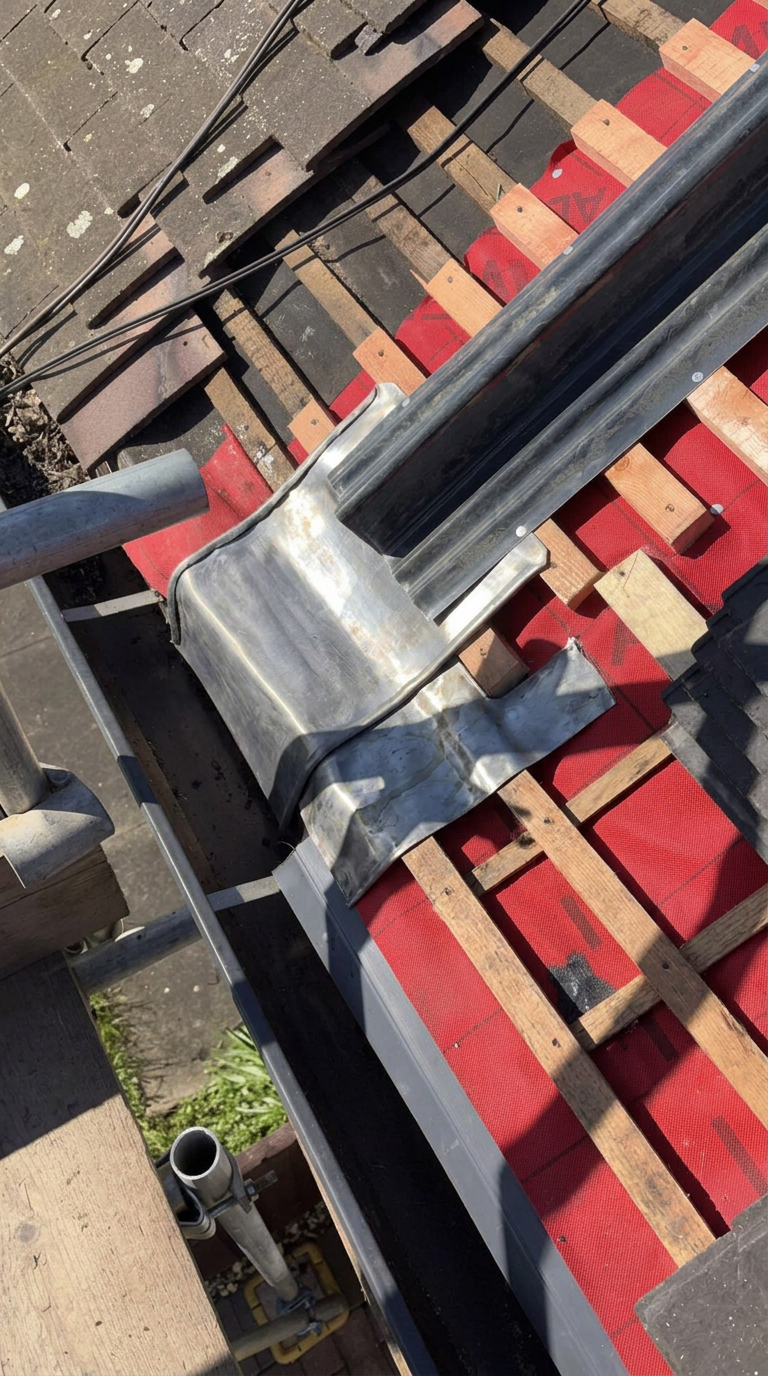
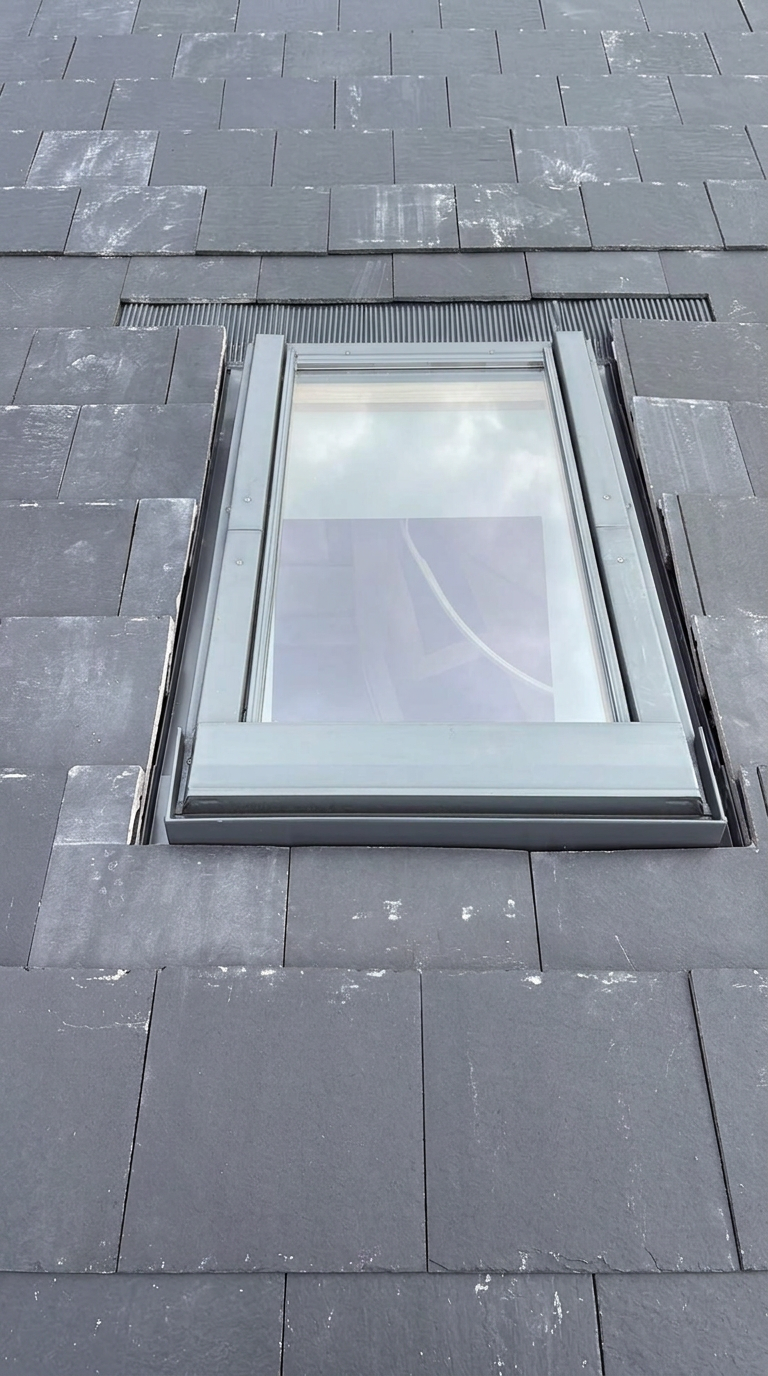
Photos and short clips from real leadwork jobs across Cannock and Staffordshire.
What happens if you leave it
Lead is the material where cost-cutting shows up fastest and most expensively. Every 'lead alternative' has a shorter lifespan and a worse detail than the real thing.
Flashband peels
Bituminous flashband is a temporary fix at best. In three years the adhesive fails and the strip curls up. Meanwhile the joint has been leaking for two.
Lead-effect coatings crack
Aluminium and rubberised 'lead-effect' flashings crack at the folds within 10 years — lead lasts 100+ in the same detail.
Wrong code splits
Code 3 lead used where Code 4 or 5 is needed splits at the folds within a decade. That's a fresh leak in a joint you thought was done.
Bad chase, no life
Lead pushed against a wall and pointed over — without a proper chase cut into the mortar joint — pops out at the first frost cycle.
Common mistakes we fix after someone else has been
- Using flashband to 'top up' failing lead. The bitumen bonds to the lead and prevents proper repair later.
- Fitting lead-effect aluminium on a period property. Planners spot it, and it looks wrong from day one.
- Reusing existing lead at a re-roof. Old lead is fatigued at the folds — always renew during major work.
- Skipping the lead-mate sealant over the pointing. The pointing is what holds the lead in the chase; the sealant is what stops water tracking behind it.
Our process
Five steps. Every job. From first WhatsApp to final sign-off.
- 1
Detail-level inspection
Every flashing, valley and lead joint photographed and assessed. We tell you which are repairable, which need renewal, and which need re-detailing.
- 2
Written quote by lead code
Code 4 or 5 specified per detail. Cost by square metre of lead, plus labour by joint. No lump sums.
- 3
Removal and chase preparation
Old lead lifted, chase raked out to 25mm depth, brushed and wetted. New lead measured, cut and formed on the roof.
- 4
Dressing by hand
Lead dressed to the substrate with proper mallets and dressers. Folds welted where needed, corners lapped and cut to size. No power tools on the fold work.
- 5
Pointing and seal
Chase pointed in 3:1 sand:cement (or NHL lime on period work), lead-mate sealant applied over the top edge. Full photo record on completion.
What you get — specifically
150-year material life
Real Code 4 and 5 lead lasts as long as the roof it's on. Once fitted, it's forgotten.
Approved for listed/conservation
Real lead is the only flashing material accepted on listed buildings and most conservation areas.
Aesthetically right
Lead patinates to a soft grey that suits every roof material — tile, slate, stone, thatch.
Owner on every job
Lee Grove on the roof — the lead is dressed by the owner, not a subcontractor you've never met.
No hot works
Cold-formed and dressed. No blowtorch, no soldering iron, no fire risk.
Fully insured
£5m public liability. Working on listed buildings and heritage properties requires it — we've got it.
The detail that separates a job that lasts
Lead codes, joint types and dressing detail all matter. Here's the technical basis for why we do what we do.
Lead codes explained
Sheet lead is graded by thickness (BS EN 12588). Code 3 (1.32mm) for soakers and small flashings. Code 4 (1.80mm) for most domestic flashings, valleys and step flashings. Code 5 (2.24mm) for exposed valleys, wide flat areas and heritage work. Wrong code = short life.
Chimney flashings
Four separate flashings per chimney: front apron, back gutter, two side step-flashings (stepped into the mortar joint course by course). Every joint welted or lapped, every top edge chased and pointed. See our chimney repairs page for the full sequence.
Valleys
Traditional lead-lined open valleys use Code 5 lead in 1.5m lengths with 150mm laps, dressed onto valley boards. On modern roofs we can also fit GRP valleys — cheaper but shorter life. Lead is the right answer on any roof that will still be there in 60 years.
Abutment flashings
Where the roof meets a wall (extension against main house, garage against side wall), lead flashing runs the full length in Code 4, stepped into the mortar joint on brick walls or continuous chase on render.
Dormer and bay cladding
Dormer cheeks, bay-window roofs and small parapet copings can be fully lead-clad in Code 4 or 5. Dressed onto ply substrate with copper-nail fixings on the top edge only (lead expands and contracts and must be free to move).
Residential vs commercial
Domestic leadwork is our bread and butter. Commercial and heritage — churches, listed community buildings, town-centre period properties — handled with appropriate access, NHL lime pointing where required, and conservation-officer sign-off where mandated.
Straight answers
How much does leadwork cost?+
Every job is quoted individually by lead code and metreage after a proper inspection. Free WhatsApp ballpark from photos, fixed-price in writing before we start.
How long does lead last?+
150+ years. Real Code 4 or 5 lead on properly detailed flashings outlives the roof and often the building.
Is lead-effect ever acceptable?+
On short-life garages or budget-critical outbuildings, yes. On the main house, on any period or listed property, and on any detail expected to last more than 15 years — no. Real lead every time.
Do you work on listed buildings?+
Yes — lead is the specified material on most listed buildings. We work to conservation-officer requirements including NHL lime mortar pointing where required.
Guarantee on leadwork?+
Leadwork isn't covered by our written labour guarantee (which we reserve for full re-roofs and flat-roof installations). Real Code 4/5 lead is the longest-life roofing material there is — properly dressed and chased in, it routinely lasts 100+ years.
Can you match existing patina?+
New lead starts bright silver and patinates naturally to soft grey over 2–3 years. Patination oil applied on installation prevents streaking during that period.
Do you do emergency lead repairs?+
Yes — 24/7. A split flashing on a stormy night gets a temporary lead-mate seal until we can renew properly.
Is lead safe on drinking water catchment?+
Not directly — we advise against lead where rainwater is collected for drinking or garden veg watering. GRP or EPDM valleys in that scenario.
Next step
Get your leadwork quote — free, fixed, in writing.
WhatsApp a photo for a same-day ballpark, or book a proper inspection. Family-run, Cannock-based, insured to £5m, guaranteed in writing.
Prefer a chat? Read about us · 88 Google reviews · Areas we cover